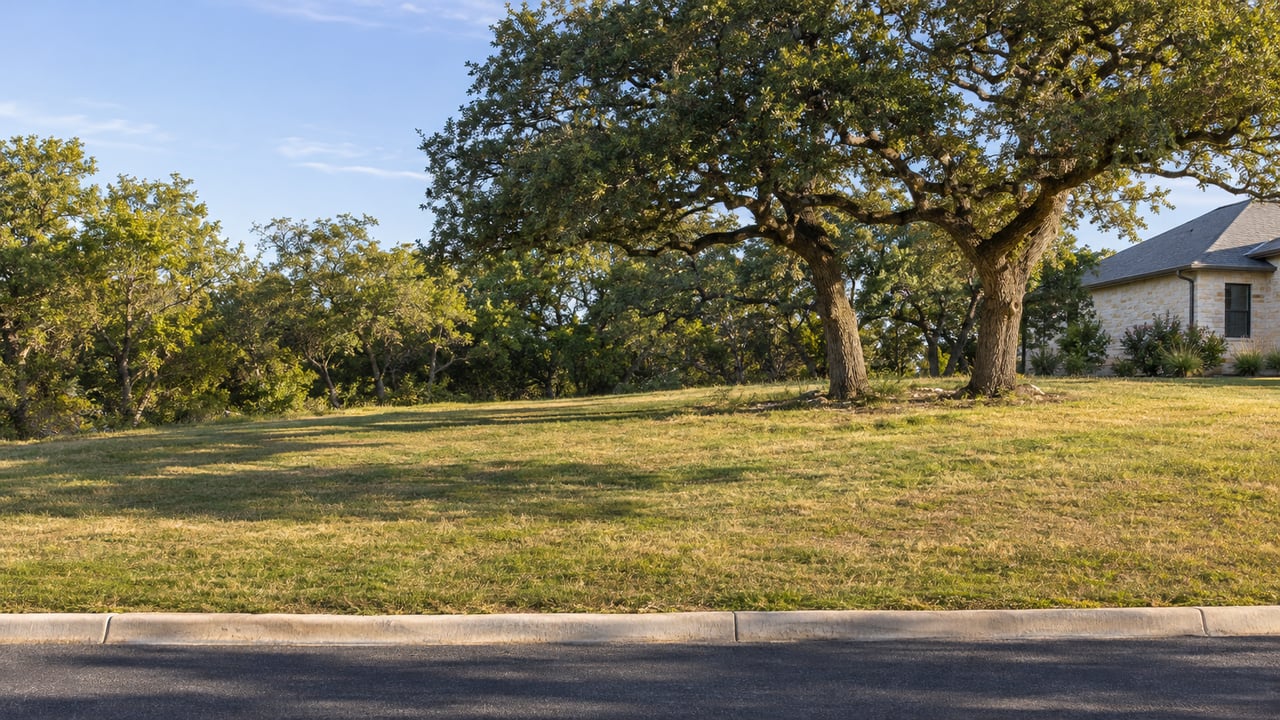
Post Oak Is Fair Oaks Ranch's First PID Neighborhood. What Does That Add to a Lot's Cost?
November 12, 2026
November 12, 2026
Each one-acre lot in Post Oak, the planned subdivision off Ammann Road across from Rolling Acres Trail, comes with a second bill. Fair Oaks Ranch made Post Oak the city's first Public Improvement District. Under that arrangement, the subdivision's streets, drainage, utilities, parks and lighting are paid for with debt that the lot owners repay in yearly installments, on top of their property taxes.
The listing price leaves out the assessment. A seller's notice describes it.
The notice form in Texas Property Code Section 5.014 explains the assessment, states that annual installments can vary, warns that an unpaid assessment can lead to a lien and foreclosure, and ends with the buyer signing to confirm receipt.
The service plan is the city's job. Under Local Government Code Section 372.013, a PID needs a service plan covering at least five years. The plan lays out annual debt, projected improvement costs and the very notice form that ends up in a buyer's hands. It is approved by ordinance or order and then filed and posted. So the assessment on a Post Oak lot appears in documents with a paper trail: the city's service and assessment plan, and the seller's notice.
Most Fair Oaks Ranch buyers compare price per acre. At Post Oak, a better question is which pieces of a finished homesite the lot price covers and which ones the buyer keeps paying for after closing.
| Piece of the homesite | Who provides or pays |
|---|---|
| Water | City of Fair Oaks Ranch |
| Wastewater | An on-site septic system on each lot, following Kendall County rules |
| Interior roads, drainage, utilities, parks, sidewalks, landscaping, lighting | PID financing, repaid by Post Oak property owners |
| Ammann Road reconstruction | City project funded by the 2024 voter-approved bond program; the owner dedicates right-of-way and contributes |
Two of those rows land on the buyer directly. The septic system is part of building the house, because the development has no city wastewater service. Community Impact reported that Post Oak's septic systems follow Kendall County regulations, and the county keeps an Onsite Sewage page for that permitting. The PID row is the other one, and it is the bigger unknown in any budget.
Fair Oaks Ranch City Council created the Post Oak Development PID by resolution on July 3, 2025, after a public hearing that opened June 19 and closed July 3. The creation resolution estimates authorized improvements and related eligible costs at $60 million. It says the city will pay none of that from non-PID funds, and it describes the installments as running as long as needed to retire the associated debt. It doesn't set a fixed number of years.
City Manager Scott Huizenga explained who carries the cost when council approved the development agreement in May 2025. Community Impact quoted him:
"That debt repayment will be borne exclusively by the property owners in the development, not by the city or its taxpayers in any way."
That protects the rest of the city. It also means the debt is spread across a fixed set of lots, and that set has shrunk twice.
The number of lots over a PID's footprint decides how many owners share the repayment. Post Oak's count has dropped sharply over a decade of planning:
The drainage rule in that amendment is strict. Detention or green infrastructure has to hold post-development runoff at or below pre-development levels for the 2-year, 10-year and 100-year storms, as shown by a drainage study. Drainage is one of the improvements the PID pays for. Each lot dropped from the plan means one fewer owner sharing the cost of the improvements that remain.
Post Oak covers about 344 acres and is planned in four phases. The creation resolution's legal description puts the 344.6-acre tract in both Kendall and Comal counties. The developer is Bitterblue, Inc., and city filings name Far Project SPV, LP as the property owner.
City Council approved the Phase 1 preliminary plat on Feb. 5, 2026. It has 65 lots: 60 for homes and five for easements. Community Impact reported that the revised Phase 1 tree plan removes 125 trees and plants 209.
The Phase 2 application, prepared by Pape-Dawson Consulting Engineers, came in during October 2026. It covers 73.42 acres north of the Rolling Acres Trail and Ammann Road intersection, with 55 one-acre-minimum home lots and four greenbelt or private open-space lots. The Planning and Zoning Commission's Nov. 12 agenda scheduled a recommendation on the Phase 2 preliminary plat and tree plan. City Council has final plat authority.
The Phase 2 tree plan marks 17 heritage trees and 26 other protected trees for removal. It calls for 77 mitigation trees and proposes 110 plantings, two for each of the 55 home lots. Phases 1 and 2 together come to 115 home lots, which leaves 112 of the 227 for Phases 3 and 4.
Outside the subdivision, Ammann Road is set for full-depth reconstruction with drainage work and utility adjustments. The cost is about $6.41 million, and the scheduled start is late 2026, according to Community Impact's 2026 roundup. The plan includes two 11-foot lanes and two paved shoulders, as Community Impact reported in August 2025.
The wider market gives a lot buyer time to do the math. In September 2026, homes across the San Antonio area averaged 88 days on market, up 11% from a year earlier, and sold for 92.4% of original list price on average, per the San Antonio Board of REALTORS September release. In Kendall County, SABOR's Q3 2026 county report shows a $587,483 median sale price and 80 days on market.
When homes sit that long, a buyer can request the PID notice and the city's service and assessment plan before making an offer. Those documents describe the assessment. The city's Post Oak Development page collects the project's public materials.
Does the PID assessment end? The creation resolution has installments continuing for as long as needed to retire the associated debt. It doesn't set a fixed term.
Can the yearly amount change? The statutory notice form tells buyers that annual installments can vary.
Do other Fair Oaks Ranch taxpayers help pay for Post Oak's infrastructure? No. The resolution says the city will pay none of the authorized improvement costs from non-PID funds.
This post is general information, not legal, tax or financial advice. Please confirm how a PID, a septic system or a purchase contract applies to your situation with an attorney, tax professional or lender.
If you're selling in Fair Oaks Ranch, start with a free home valuation from Frontline Properties.
Monique is here to guide you every step of the way. With care, clarity, and a focus on results, she’ll help make your next move easy and successful. Reach out today and let’s get started!

Frontline Properties
Office Address 23702 I-10 Ste. 105 San Antonio TX 78257 Brokerage Address 23702 Frontage Rd IH10 West Ste. 105 San Antonio TX 78257